
- July 22, 2026
- Credentialing
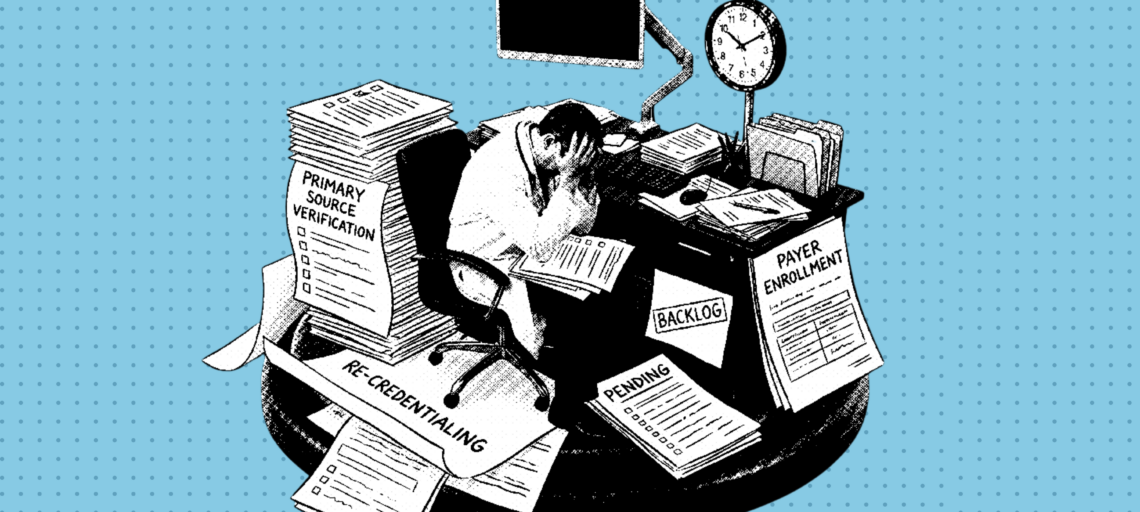
Waiting months for a provider to become credentialed is not only frustrating, but it can prevent patients from accessing care and also impact revenue for hospitals, health systems, and medical practices. According to an MGMA Stat poll, which cites data from a Merritt Hawkins physician revenue survey, a single day of delayed provider onboarding can cost a medical group more than $10,000 in lost revenue. Typically, credentialing hiccups can delay the process by weeks to months; however, the good news is that many of the factors that slow down provider credentialing are preventable.
By recognizing challenges early, healthcare organizations can streamline credentialing, avoiding unnecessary delays and helping providers start seeing patients sooner.
Here are some of the most common reasons provider credentialing takes so long and how to address them.
Incomplete or inaccurate information
This may sound simple, but even one missing field or data point can significantly delay credentialing. In some cases, organizations may need to resubmit applications or provide additional documentation, adding unnecessary time to the process. That same MGMA Stat poll found that more than half of medical practices reported an increase in credentialing-related claim denials, with incomplete applications among the leading causes.
Taking the time to verify provider information before submission can help avoid preventable setbacks. Additionally, a provider credentialing platform like Modio’s OneView can help maintain a current database with provider information updated in real time so that credentialing teams don’t have to worry about information slipping through the cracks.
Manual processes slow down credentialing
Many healthcare organizations still manually credential providers. This means spreadsheets, email threads, and paper files are used to manage the process. According to the 2025 CAQH Index, which drew data from more than 600 provider organizations and health plans representing 63% of insured lives nationwide, greater adoption of automated healthcare administrative workflows could unlock more than $18 billion in industry-wide savings. While change can be difficult for any organization, modernizing and automating credentialing processes can save hours and improve efficiency.
An automated platform like Modio’s OneView can streamline workflows, reduce administrative burden, improve accuracy, and free staff to focus on clinical work.
Understanding payer-specific requirements and workflows
Payer enrollment is one of the most challenging parts of the credentialing process, as every payer has its own requirements, forms, and timelines.
Maintaining accurate provider data, automating enrollment workflows where possible, and communicating consistently with payers can help reduce delays and keep applications moving forward.
Communication matters
The importance of good, consistent communication with providers and payers cannot be emphasized enough and is key to ensuring everything moves forward seamlessly.
When communication breaks down, missing documents or unanswered questions can quickly stall the process. Working with an experienced credentialing partner like Modio can help keep everyone informed, proactively address issues, and ensure applications continue moving through the process.
Staying up to date on regulatory requirements
Like many aspects of healthcare, provider credentialing is constantly evolving. Credentialing teams must stay current on medical board requirements, licensing, certifications, malpractice insurance, and payer regulations, all of which vary by state and specialty.
Keeping track of these ongoing requirements can be challenging, but staying ahead of regulatory changes helps organizations avoid compliance issues and prevents unnecessary credentialing delays.
See all of the essentials Modio can offer your organization and more. Schedule a demo today.